Flat and low-slope roofs are common on Chicago homes, apartment buildings, and commercial properties. They are designed to move water toward roof drains, scuppers, or gutters—but clogged drainage, settled insulation, deck movement, or an inadequate slope can leave water sitting in low spots.
What is ponding water?
Roofing professionals generally use “ponding” for water that remains after a storm instead of draining or evaporating normally. The important pattern is not a puddle seen while it is raining; it is water that repeatedly stays in the same area well after the weather clears.
Chicago also has specific roof-drainage requirements. For example, the city code says roofs larger than 750 square feet must drain to a sewer when one is available in an adjoining public way or place. The exact requirements for a property depend on its size, drainage layout, and construction, so an inspection should evaluate the whole system rather than only the visible puddle.
Six common causes on Chicago flat roofs
- Blocked roof drains or strainers. Leaves, seed pods, roofing debris, and windblown trash can slow water at the drain.
- Low areas in the insulation. Compressed or poorly pitched insulation can create shallow basins beneath a TPO or modified-bitumen membrane.
- Deck movement or deflection. An older deck may settle between supports and change the drainage path.
- Drainage changes after other work. New rooftop equipment, patches, or added roof layers can interrupt the original route toward a drain.
- Raised seams or repair edges. A repair that is watertight may still create a small dam if transitions were not planned carefully.
- Undersized or poorly placed outlets. Scuppers, downspouts, and internal drains must work together during Chicago’s heavy rain events.
Warning signs that should not wait
- Water remains in the same area long after nearby roof surfaces are dry.
- The membrane has wrinkles, open seams, bubbles, cracks, or soft areas near the puddle.
- Water marks, peeling paint, or ceiling stains appear inside the building.
- A roof drain backs up, gurgles, or drains much more slowly than before.
- Water sits against parapet walls, flashing, skylights, or mechanical penetrations.
If the roof surface feels soft, visibly sags, or holds unusually deep water, keep people off that area and arrange a professional evaluation. A roofer may also recommend review by a qualified structural professional when deck movement is suspected.
What a useful flat-roof inspection should check
A good inspection follows the water path. That includes the membrane, seams, previous patches, flashing, penetrations, parapet transitions, drains, strainers, scuppers, gutters, and downspouts. Photos after rainfall can be especially helpful because they show the size and location of recurring low areas.
The solution may be as simple as clearing and maintaining drainage. Other roofs need a targeted membrane repair, drain work, tapered insulation to improve pitch, or a larger restoration or replacement plan. Covering the visible spot without correcting the cause can leave the drainage problem in place.
Where white TPO fits into the decision
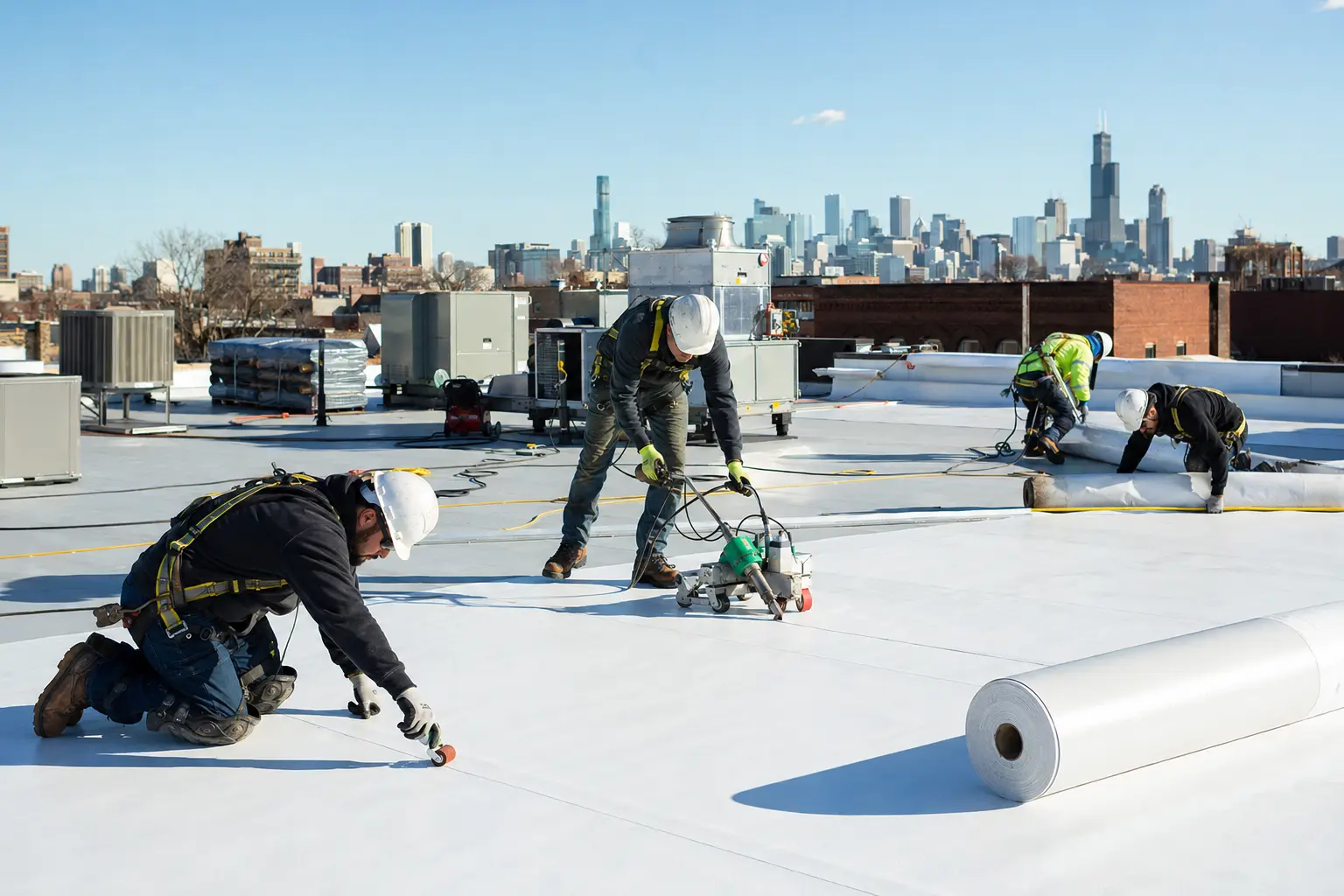
White TPO is a reflective, heat-welded membrane option used on many Chicago low-slope roofs. Reflective roofs absorb less solar heat than conventional dark roofs, according to the U.S. Environmental Protection Agency. But membrane color does not correct poor drainage by itself. The roof assembly still needs sound decking, appropriate insulation and slope, secure flashing, and working drains.
For an aging roof, the right question is not simply “Can we put TPO over it?” It is whether the existing assembly is dry and suitable, how water will reach the drains, and whether an overlay or full tear-off is the more responsible long-term option.
A practical checklist after the next rain
From a safe location, note where water remains and take time-stamped photos.
Check ceilings and walls below for new staining or dampness.
Look for visible debris at accessible gutters and downspout outlets.
Do not walk on wet membranes or attempt to clear an unsafe roof.
Share the property address, photos, and leak location when requesting an estimate.
Need a flat-roof inspection in Chicago?
Leaf Gutter & Roofing Solutions works on TPO, modified-bitumen and torch-down roofs, roof repairs, drainage improvements, gutters, and downspouts throughout Chicago and nearby suburbs. We can inspect the visible problem, explain the practical options, and provide a clear estimate.
Start with the roof and drainage together.
Call or text (773) 900-4004, or send your address and project details through our estimate form.
Request a free estimate